Can I afford to hire someone? How to check first
The real cost of a new employee, why the average year can mislead you, and how to test the decision before you commit.
Step 1: the real cost of the hire
The salary is only part of it. On top of wages, an employer usually pays KiwiSaver employer contributions, ACC levies and paid leave, plus things like equipment, software and training. A rough rule of thumb is to add around 10% or more to the salary; your accountant can give you the exact figure for your business.
In our example, a $65,000 hire costs about $71,500 a year, or $5,958 a month.
Step 2: don't stop at the average
Most "can I afford it" answers, including ones from AI, compare yearly sales with yearly costs. The example café makes about $534,600 a year and spends $468,000 before the hire. After the hire's $71,500, it still finishes the year about $7,000 ahead. So the answer is yes, on average.
But a café's sales aren't even. Summer is busy and winter is slow, and some years are better than others. The question that matters is whether the bank balance ever drops below zero along the way.
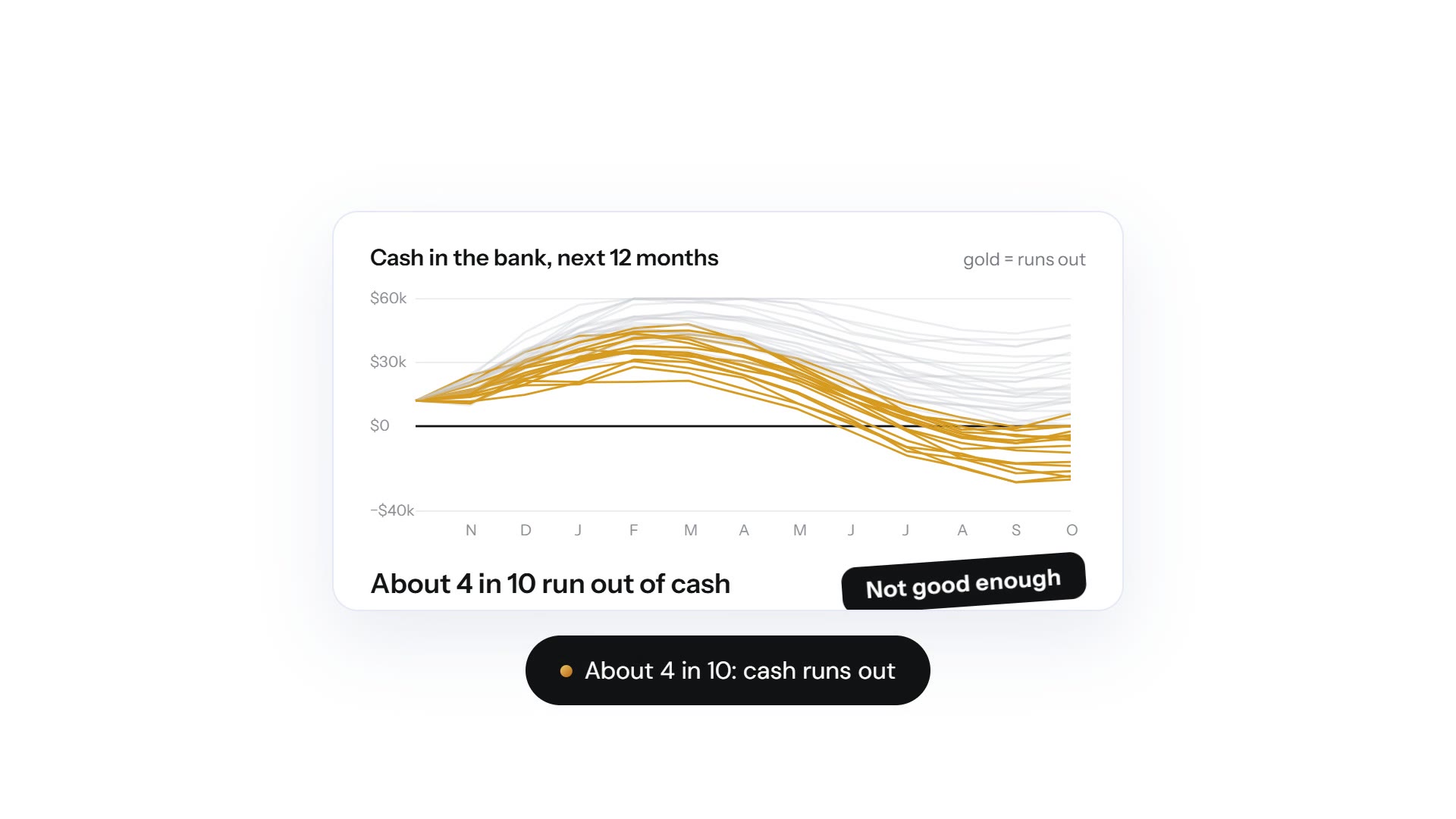
Step 3: test it a million ways
We ran the café's next 12 months through Gnomon a million times, with each month's sales and the year as a whole moving up and down in realistic ranges. Then we counted how often the cash stays positive all year:
| Until September, the new person works | Cash stays positive | Lowest balance, typical |
|---|---|---|
| Full time | 61 of 100 | $4,799 |
| 4 days a week | 83 of 100 | $14,908 |
| 3 days a week | 95 of 100 | $18,338 |
| 2 days a week | 99 of 100 | $20,091 |
From September the hire is full time in every option. Starting at 3 days a week keeps the café safe in 95 of 100 futures, while still bringing someone on now. You can try the same numbers yourself on the Gnomon page.
Ways to make a hire safer
- Start part time and step up as the busy season builds cash.
- Time the start after your busy months, not before your slow ones.
- Keep a buffer: decide how many months of costs you want in the bank before hiring.
- Agree a review point with the new person, in line with your employment agreement.
- Talk to your accountant before you commit. This guide is general information, not financial advice.
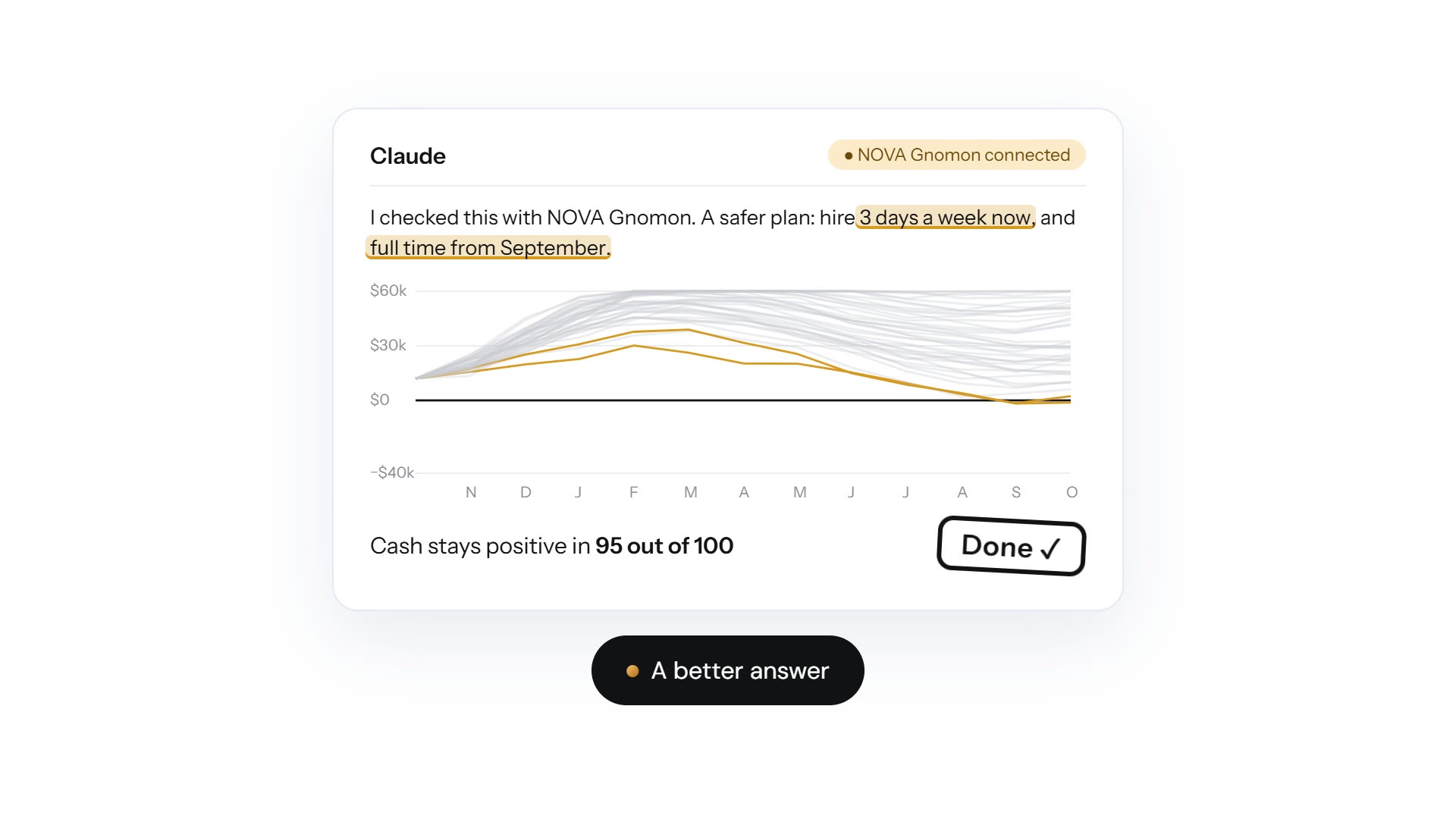
Ask your AI, with Gnomon connected
You don't have to build a model. Ask Claude, ChatGPT or Grok "can I afford to hire someone?" with Gnomon connected, and your AI runs the question a million times before it answers. Instead of "yes, on average", you get the odds and a safer plan.
Questions
How do I know if I can afford to hire someone?
Add up the full cost of the hire, then check your cash month by month across good and bad years, not just your yearly profit. If cash could run out in slow months, start part time or later.
How much does an employee really cost in New Zealand?
The salary plus employer costs such as KiwiSaver contributions, ACC levies and paid leave, plus equipment and training. Around 10% or more on top of salary is a common rule of thumb; check yours with an accountant.
Should I hire full time or part time first?
If the numbers are tight, a part-time start lowers the risk while your busy season builds cash. In the example, a 3-day start was safe in 95 of 100 futures against 61 for full time.
Can AI tell me if I can afford to hire?
It can help, but on its own it tends to answer on the average year. Connect Gnomon and the answer is tested a million times first.
Let your AI check its work.
Add Gnomon to Claude, ChatGPT or Grok. Every answer that matters gets run a million times first.