How to build an AI team for a small business
Which roles to start with, how to brief them, and how to keep them safe while they take work off your plate.
1. Start with the jobs, not the tools
Write down the work that eats your week. Look for jobs that come back again and again, that you could explain to a new starter in a few minutes, and that you can check quickly when they're done.
- Researching competitors, suppliers or prices
- Writing social posts, newsletters and follow-up emails
- Finding and sorting possible customers
- Turning meetings into notes and action items
- Planning a launch, a campaign or the week ahead
Keep anything that needs your judgement on a person, such as pricing decisions, hiring or a difficult customer, for you to do yourself.
2. Pick two roles to begin with
One AI employee is useful. Two that work together is where it starts to feel like a team. For most small businesses a good first pair is:
- A Research Analyst who finds information, compares options and gives sources.
- A Marketing Manager who turns that research into posts, emails and plans.
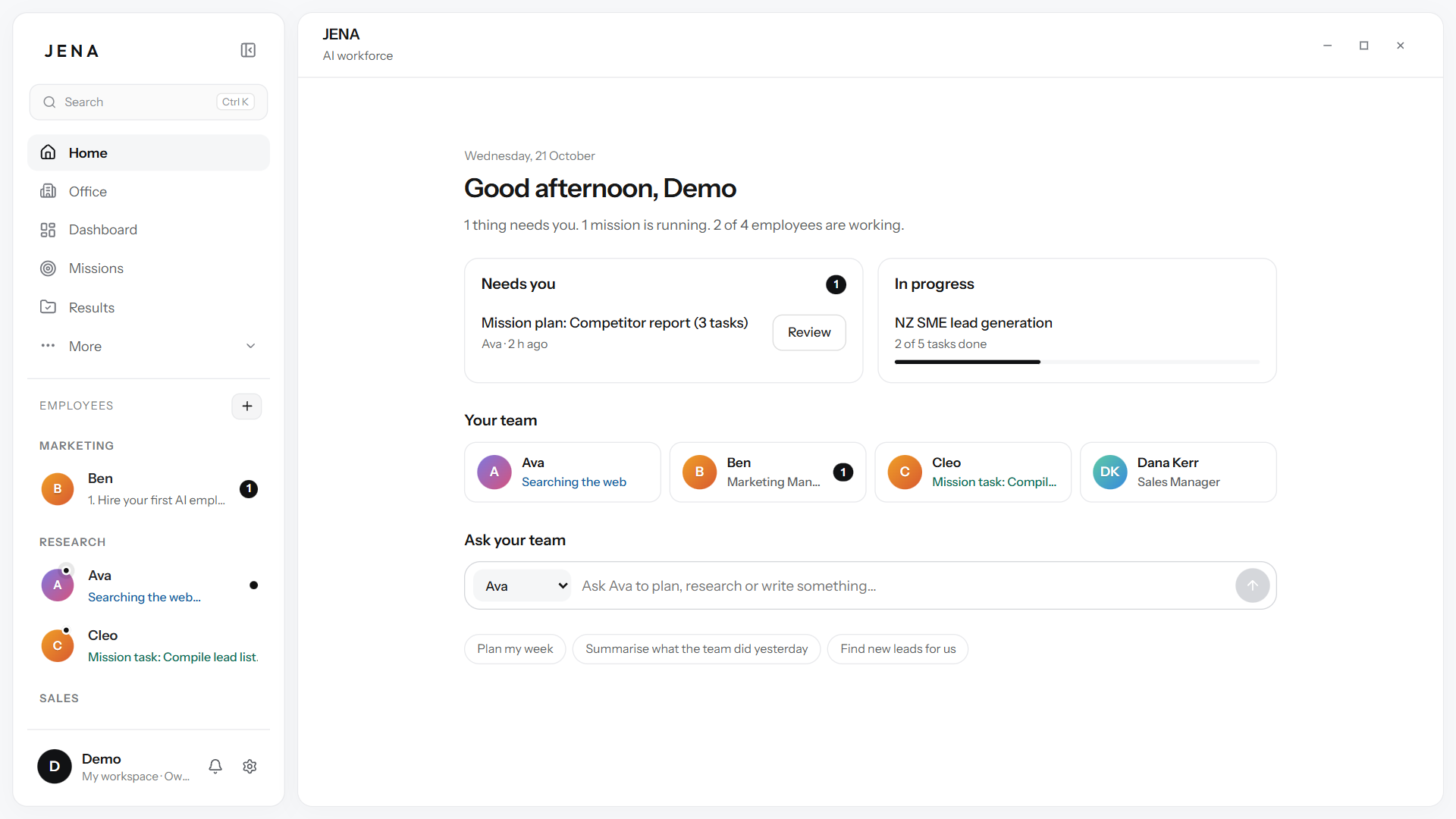
The Marketing Manager can ask the Research Analyst for competitor prices, then write the campaign. You hand over one job and get one finished result. In JENA both are ready-made roles, so each takes a few minutes to set up.
3. Brief each employee like a new starter
The clearer the brief, the better the work. Give every AI employee:
- A job title and goal: "Marketing Manager. Get more bookings from local customers."
- Your tone: "Friendly and plain. No jargon. Short sentences."
- Rules: "Never mention prices in posts. Always include our booking link."
- What not to do: "Don't reply to complaints. Flag them to me."
4. Teach it your business
An AI team is only as good as what it knows about you. Add your products and prices, who your customers are, your best past emails and posts, and the questions customers ask most. In JENA this goes into the team's memory, so you don't repeat yourself in every job.
5. Connect apps, but only the ones each role needs
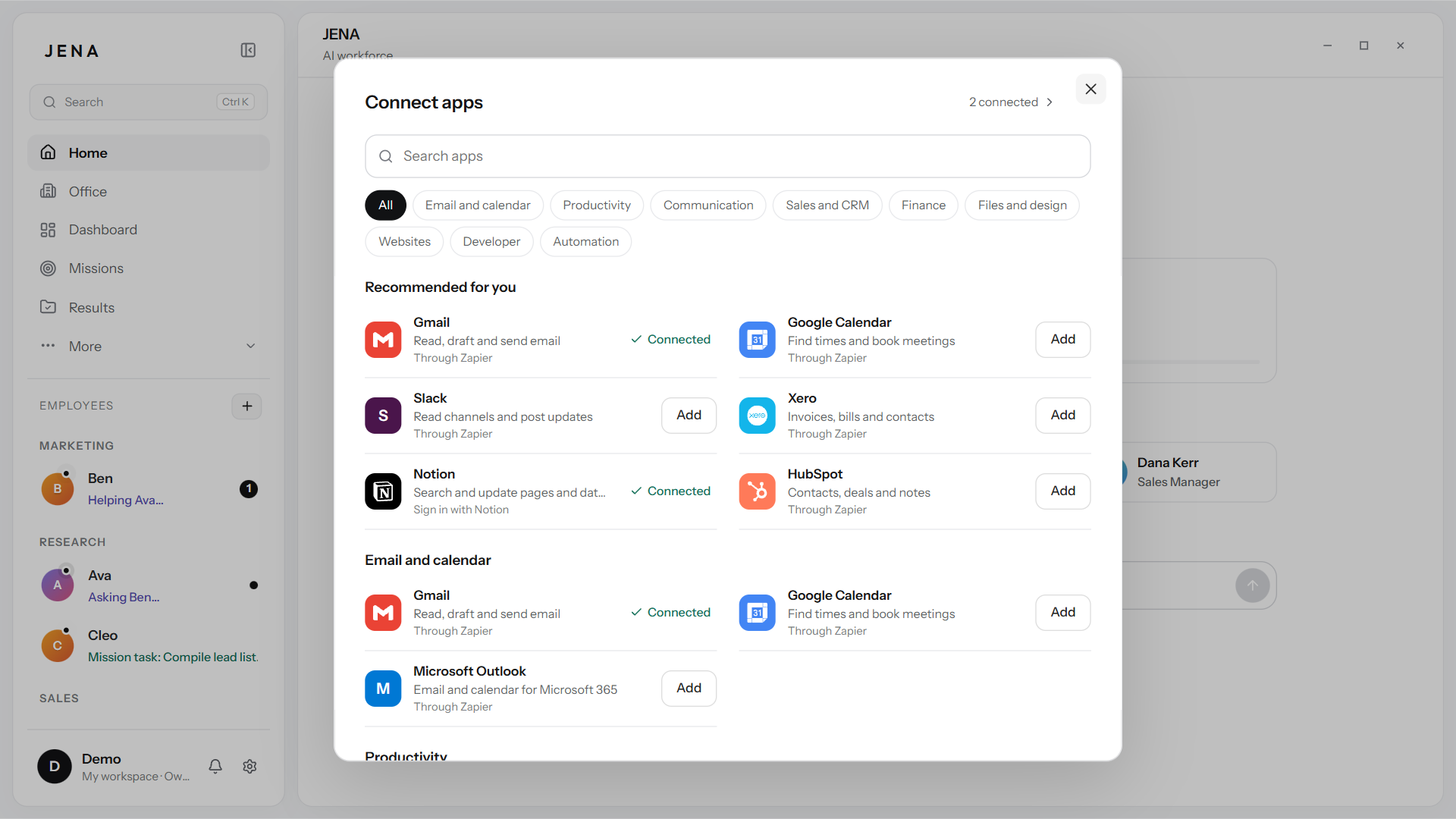
Give each employee the smallest set of apps that lets it do its job. Your Research Analyst may only need the web and a shared document folder. Your Marketing Manager may need email and your social scheduling tool, and nothing that touches your accounts.
6. Keep approvals on for anything that goes out
AI makes mistakes, like people do. The safe setup is simple: anything that sends an email, posts online or spends money stops and waits for you. In JENA that is always the case, and every action is recorded so you can see exactly what happened and when.
7. Give it a real first job
Pick something you would normally do this week, and brief it the way you would brief a colleague:
Find our three closest competitors in Auckland, compare their prices
and what they offer, and suggest two things we could do better.
Then review the result and say what to change. Feedback like "shorter, and lead with the price" is remembered for next time.
8. Grow the team when it's earning its place
Once your first two employees are saving you time every week, add the next role your work needs:
| Business | Good first team |
|---|---|
| Marketing or design agency | Research Analyst, Content Writer, Social Media Manager |
| Online store | Marketing Manager, Customer Support Lead, Operations Manager |
| Accountant or bookkeeper | Executive Assistant, Research Analyst, Finance Analyst |
| Trades and services | Executive Assistant, Marketing Manager, Sales Manager |
| Consultant or solo founder | Chief of Staff, Research Analyst, Content Writer |
Mistakes to avoid
- Starting with ten employees. Start with two and learn what works.
- Vague briefs. "Do some marketing" gets vague work. Say what, for whom and by when.
- Giving every employee every app. Match access to the job.
- Switching approvals off to save time. Checking a draft takes seconds. Fixing a wrong email takes much longer.
- Never giving feedback. A short note after each job makes the next one better.
You can set up your first AI team with JENA free for 7 days. It comes with 12 ready-made roles, so your first two employees take minutes, not days. New to the idea? Start with what an AI employee is.
Questions
How many AI employees does a small business need?
Start with two that cover your most repeated jobs, such as a Research Analyst and a Marketing Manager. Add more only when the first ones are saving you time.
What can an AI team do for a small business?
Research, write posts and emails, find and sort leads, plan campaigns and turn meetings into action items. Anything that goes out should wait for your approval.
Do I need technical skills to build an AI team?
No. In JENA you pick ready-made roles, write instructions in plain words and give jobs by typing, like messaging a colleague.
How much does an AI team cost?
JENA starts at NZ$29 a month for up to 3 AI employees, with a 7-day free trial and no card needed.
Is it safe to connect my email and apps?
It is when each employee only gets the apps it needs and anything that sends, posts or pays waits for your approval.
Build your first AI team today.
Pick two roles, give them a real job and see what comes back. Free for 7 days.